Duty, Patriotism, and Wartime Service
Young Captain Jack · The Son of a SoldierDuty, Patriotism, and Wartime Service is one of the book’s central tests of character. Wartime service is not measured solely by wearing a uniform or claiming loyalty to a cause: it is measured by what a person protects when danger arrives, whether private power is restrained, and whether courage accepts hardship for the sake of others. Jack Ruthven gradually turns youthful military enthusiasm into practical responsibility, while the surrounding conflict exposes the difference between patriotic language and conduct.
Military Ambition and Family Obligation
Jack Ruthven initially imagines military life through its glory rather than its suffering. He speaks on several occasions of enlisting as a drummer boy, but Mrs. Ruthven refuses to let him go, telling him, "No, no, Jack! I cannot spare you!" and adding that one member gone from the family is enough. Marion Ruthven also clings to him, making departure nearly impossible. His desire to serve is therefore framed against a competing obligation: remaining with the family that adopted and depends on him.
The contrast becomes sharper in St. John Ruthven’s response to the same wartime ideal. When Jack’s bravery is praised, St. John claims that he would go to the front if his mother did not need him at home, adding that the plantation requires someone to look after it. He further says that the plantation cannot be entrusted to the enslaved people. When told that many men have left their plantations and placed national honor above private concerns, St. John insists that his mother has forbidden him to go. His language invokes family duty and property management, but the scene presents these explanations as anxious efforts to preserve his reputation rather than as a willing sacrifice.
Jack Ruthven’s Local Service
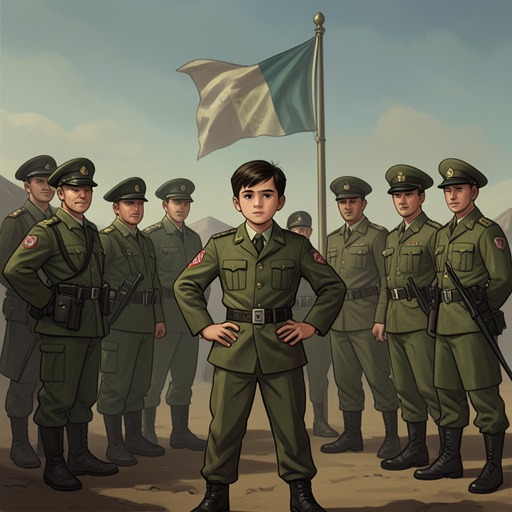
Jack’s patriotism takes a local and concrete form. Instead of merely wishing to become a soldier, he helps organize a Home Guard with Darcy Gilbert. The company consists of twenty-three boys, and Jack is its captain. He possesses an old sword and a pistol, while the other members have pistols or guns. The small force is not a regular army, but its organization gives Jack a real public responsibility: he must convert youthful martial enthusiasm into discipline, protection, and judgment.
That responsibility is tested when danger approaches the Ruthven homestead. After learning that the enemy is near, Jack calls out the Home Guard and tells Mrs. Ruthven that the Yankees will not destroy the plantation or molest her and Marion Ruthven. His foster mother warns him not to do anything rash, showing that duty in the novel includes restraint as well as boldness. Jack’s objective is defensive rather than expansive. He does not seek glory through an attack; he places himself between the household and the threat.
Jack also treats this responsibility as a continuing regional obligation. When protection is needed for stores and homesteads, he divides the work with Darcy Gilbert, sending him along the shore road while Jack takes the Batsford road. He arranges for others to summon boys from the mountain road and plans for assistance to reach those at Brackett’s plantation. The Home Guard thus becomes a network of local protection, extending beyond Jack’s immediate household and tying patriotism to organized service among neighboring communities.
Private Property, Hospitals, and the Ethics of War
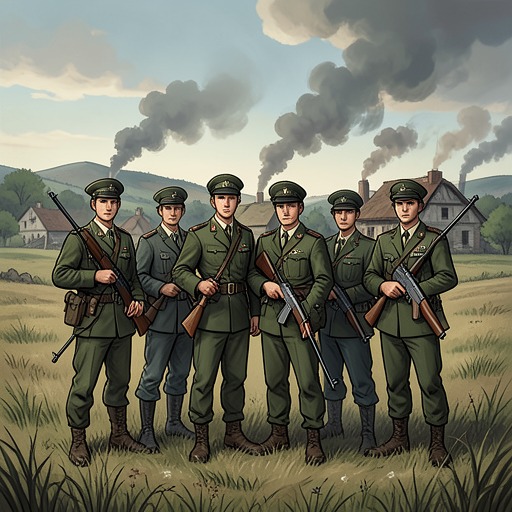
The defense of the Ruthven home reveals that Jack’s sense of duty is governed by rules, not only by allegiance. A company of predatory guerrillas follows the cavalry, described as men who fight chiefly in order to loot afterward. When their captain, Sandy Barnes, orders the company toward the house, Jack draws up his boys across the lawn. He declares that the property is private and must be respected, then adds a more urgent reason: the house is being used as a hospital containing six wounded Confederates in the care of a surgeon.
Jack repeats the same appeal when a Confederate colonel passes by. He anxiously asks that the place not be harmed because it is private property and shelters six wounded men. The colonel answers that an officer who is a gentleman respects private property and that Jack and his men have nothing to fear so long as they do nothing treacherous. This exchange establishes a moral contrast within wartime authority. The colonel accepts limits on military power, whereas the guerrillas treat the home as an opportunity for plunder. Jack’s defense therefore invokes both property protection and the special vulnerability of the wounded.
The episode also separates legitimate service from mere violence. Jack’s armed resistance is defensive and publicly justified; the guerrillas’ threat is connected to looting; and the colonel’s authority is represented as honorable because it recognizes boundaries. The same war produces different moral orders depending on whether force is used to protect people and institutions or to exploit them.
Coercion, Captivity, and the Failure of Wartime Honor
The book further tests the language of duty by showing how easily military power can become personal coercion. When Jack openly tells Dr. Mackey that he believes the doctor is a fraud, the doctor responds with rage and cunning. He threatens to make Jack suffer, seizes him by both arms, and orders Confederate soldiers to conduct him to camp and prevent his escape. The action is not presented as honorable military service. It is a private act of domination carried out through military men and military authority.
Jack and his companions later spend two days in the Guerrilla Cave. Their captors treat them brutally and provide barely enough food to prevent starvation. Pete Gendron is especially hostile toward Jack and repeatedly insults him, even expressing the desire to kill him and obtain money for himself. This treatment strips away any claim that the guerrillas represent disciplined patriotism. Their conduct combines captivity, hunger, personal hatred, and greed, turning wartime power into an instrument of predation.
Against such behavior, Jack’s earlier defense of the hospital assumes greater significance. He recognizes that wartime conduct must remain answerable to obligations toward the helpless, while his enemies treat prisoners and property as objects to be controlled or consumed. The novel’s moral vocabulary therefore judges service by treatment of dependents, wounded people, and captives as much as by battlefield courage.
Patriotism and the Problem of Identity
The theme of service is intertwined with Jack Ruthven’s uncertain identity. Darcy Gilbert reports that St. John Ruthven has called Jack a nobody who does not belong to the Ruthven family and will someday have to leave. Marion Ruthven counters that Jack was adopted when he was three or four and is now John Ruthven, her own brother. The revelation unsettles Jack’s social position, but it does not erase the duties he has already assumed. His belonging is first established through care, adoption, and action before it is clarified through blood.
The uncertainty continues when Dr. Mackey claims, "Jack, I am your father!" Later, the truth is revised again when Jack learns that he is not Dr. Mackey’s son but Colonel Stanton’s son, a fact Colonel Stanton has proved beyond doubt. These competing claims make paternal identity a disputed form of authority. Each alleged father attempts to define who Jack is, but Jack’s conduct provides the more stable measure of his character: he organizes protection, rescues a drowning St. John Ruthven by diving into the bay, defends a hospital, and resists coercion.
The resulting pattern gives patriotism a broader meaning. Jack’s service does not depend entirely on a secure name, legal status, or biological inheritance. Before his parentage is settled, he acts as a brother, foster son, captain, rescuer, and defender. The story consequently places moral citizenship in conduct: the person who accepts danger for others demonstrates belonging more convincingly than the person who merely claims rank, lineage, or patriotic intention.